TL;DR: Write the Docs Bay Area Panel — May 7, 2026
- Event: State of the Docs Panel at Mindspace SF, 575 Market Street, sponsored by Gitbook
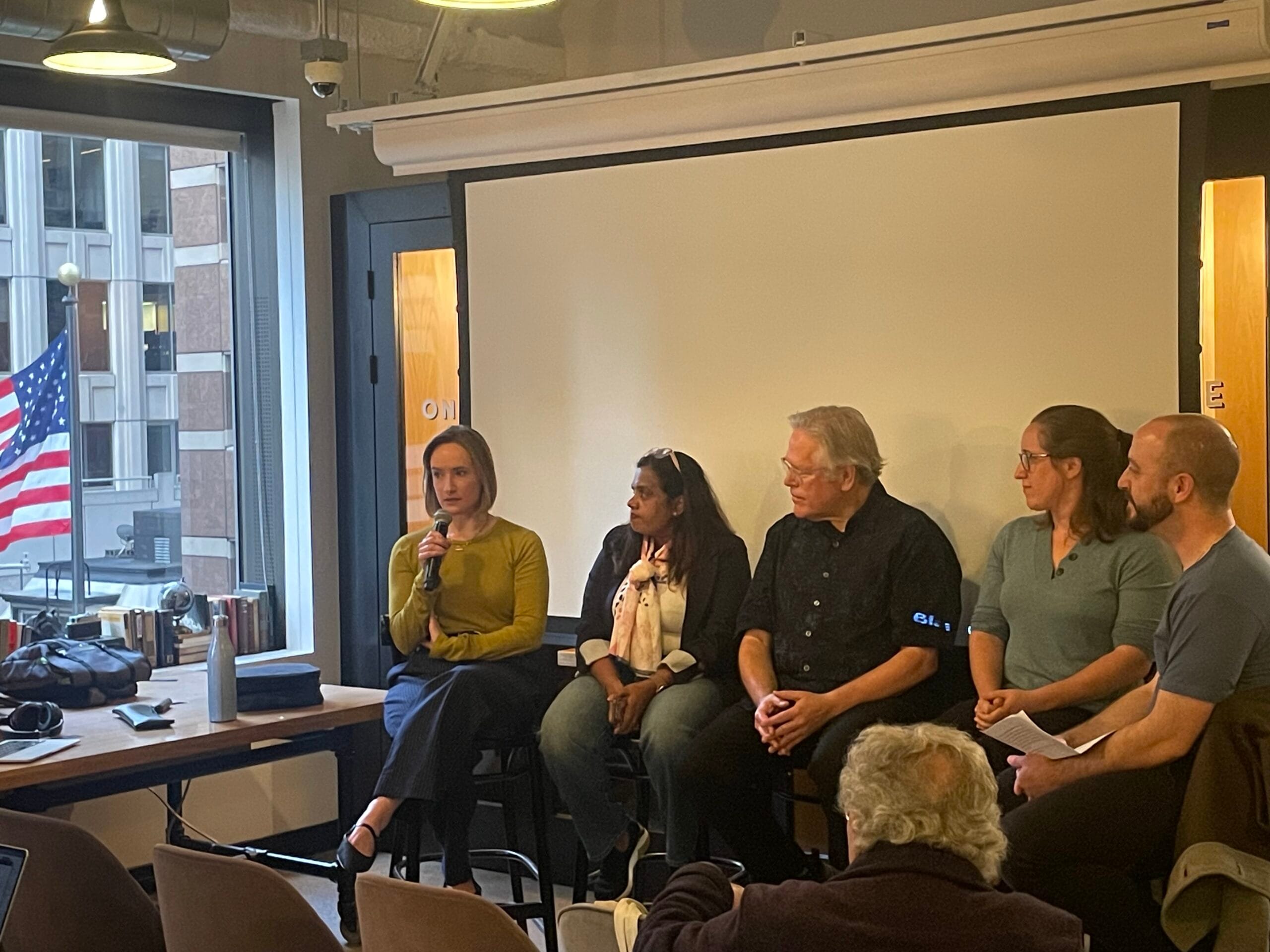
- Panelists: Sarah Dugan (Gitbook), Priya Ayyar, Paul Gustafson, Sarah Deaton | Moderated by Tal Gluck
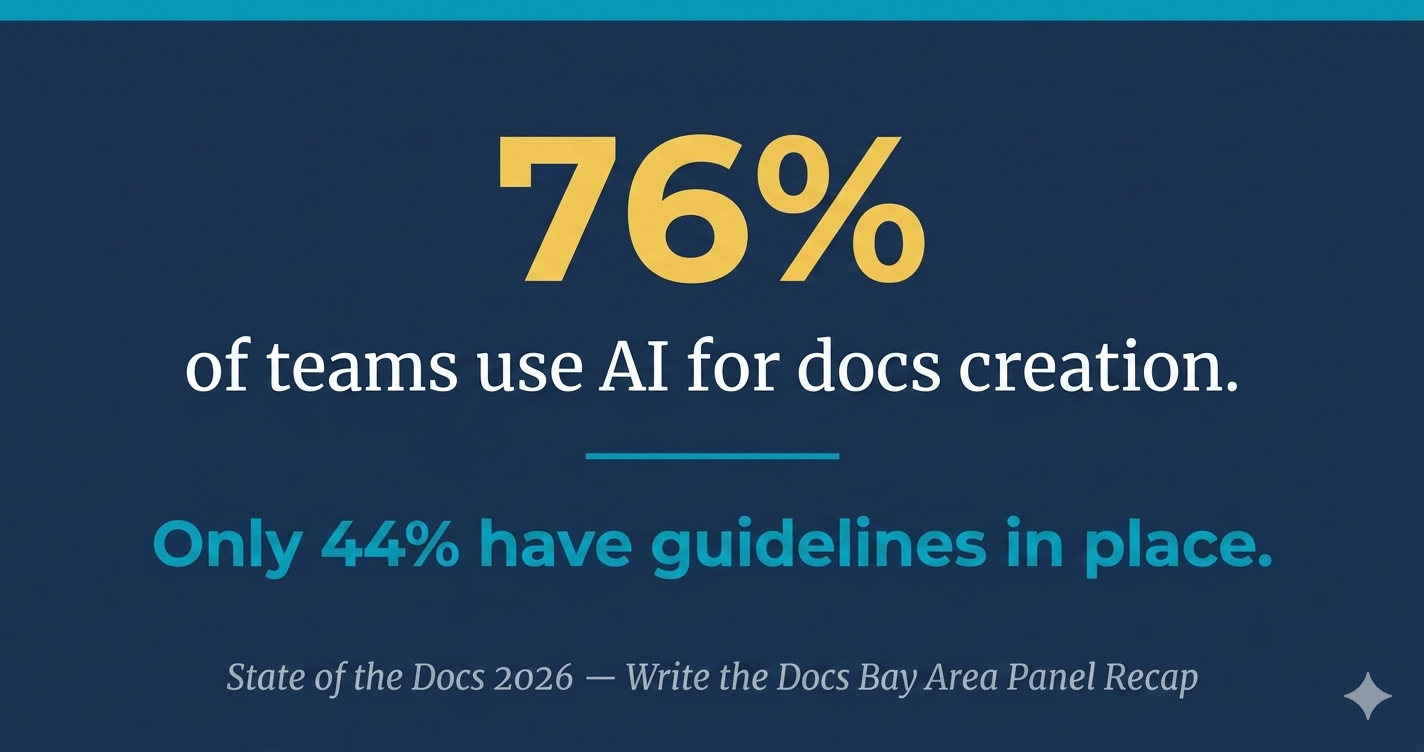
- Most striking data point: 76% of teams use AI for docs creation. Only 44% have governance guidelines in place
- Top new skill according to State of the Docs 2026: Proofreading and content editing, cited by 34% of respondents
- Strongest panelist quote: “Software is cheap. Taste is expensive.” — Sarah Deaton
- Consensus theme: AI is accelerating output, but expertise is still critical for validating what AI produces
- Bottom line: Technical writing is not dying. Writers who can evaluate, validate, and improve AI output will have the advantage
By Doug Purcell | Write the Docs Bay Area
Jump to a Section
- About the Event
- Takeaway #1: Subject Matter Expertise Is More Valuable Than Ever
- Takeaway #2: Documentation Metrics Are Evolving
- Takeaway #3: AI Governance Is Real — and Most Teams Are Behind
- What This Means for Technical Writers
About the Event
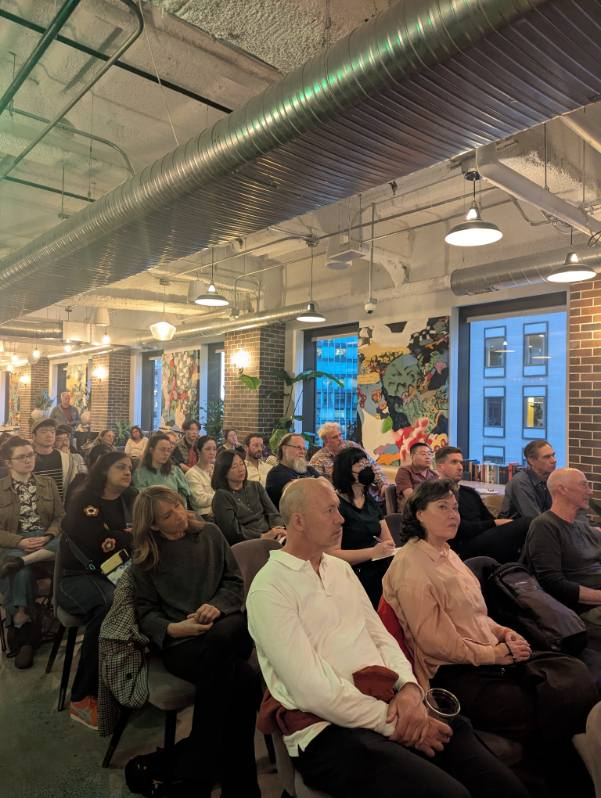
The Write the Docs Bay Area State of the Docs Panel — sponsored by Gitbook — took place on May 7, 2026, and it was a memorable evening for the technical writing community in the San Francisco Bay Area.
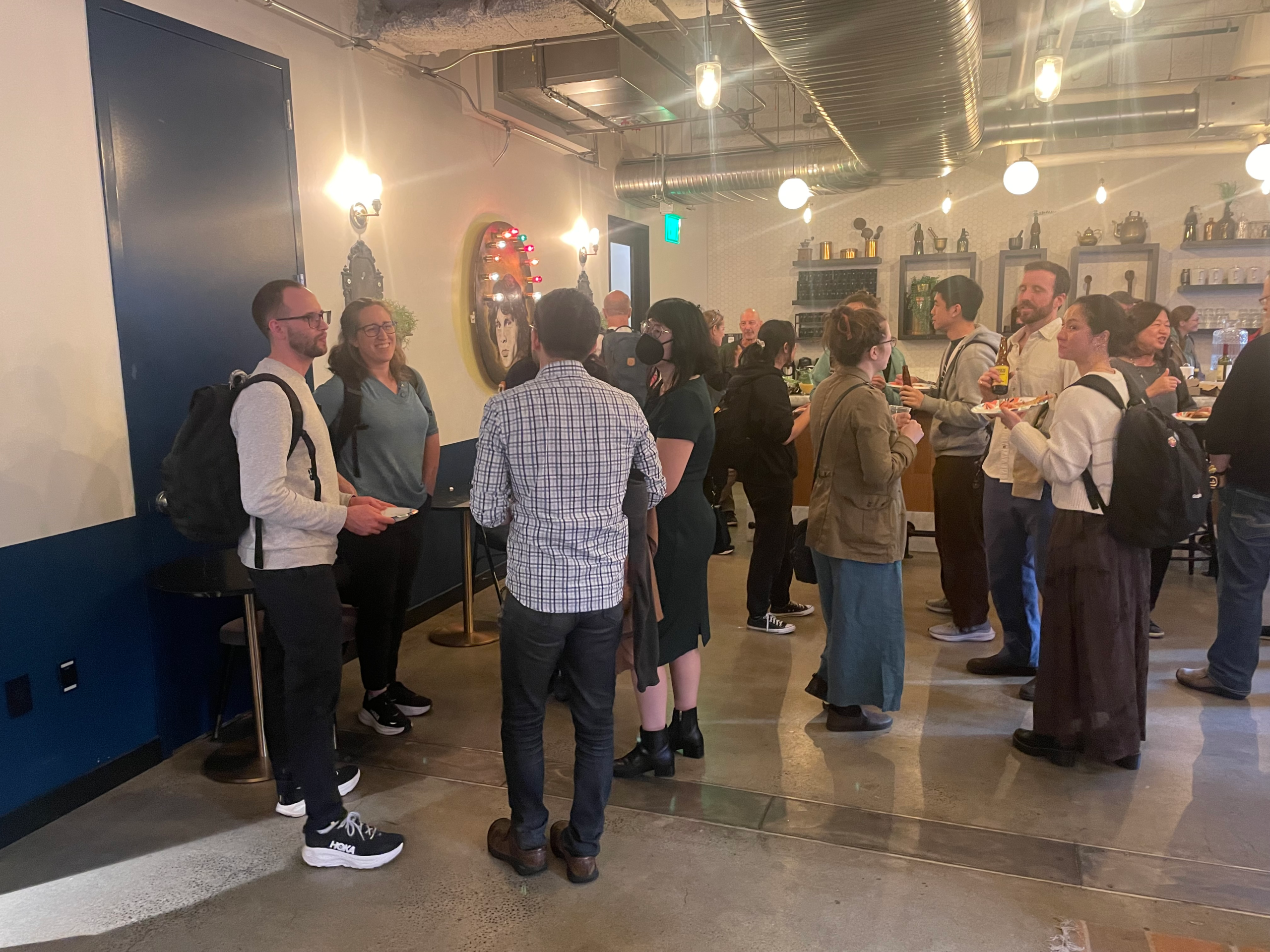
I arrived at the Mindspace coworking space at 575 Market Street around 5:45 PM. After checking in with security, I rode the elevator to the fourth floor, where the Mindspace logo greeted me as I stepped off. I followed the sound of conversation to the event space, where I connected with my co-organizer, Tal Gluck from Gitbook, before making my way around the room.
I had a great conversation with Elad from Gitbook and introduced myself to Sarah Dugan — a seasoned technical writer who had just joined Gitbook as their lead technical writer and was one of the evening’s panelists. Tal was kind enough to ask me to sign his copy of the State of the Docs 2026 report and gifted me a copy as a keepsake — a thoughtful gesture I was genuinely happy to receive. I’m proud to be quoted in the 2026 report, and I’ve also written a separate post with my five key takeaways from the report itself, which you can read here: State of the Docs 2026 Takeaways.
Takeaway #1: Subject Matter Expertise Is More Valuable Than Ever
As AI tools become more prevalent in technical writing workflows, it’s tempting to assume they’ve reduced the need for deep expertise. They haven’t.
AI can hallucinate. It can generate output that sounds authoritative but contains factual errors — which is exactly why a human-in-the-loop approach remains essential for ensuring quality. This theme came up directly in response to the panel question: “What have you found makes the difference in getting good output from AI tools?”
The answers were telling. Sarah Dugan put it simply: “Expertise is still critical.” Priya Ayyar added: “Know what good looks like.”
These aren’t abstract ideas. Consider what this means in practice: if you’re a technical writer using a large language model (LLM) to generate documentation, your professional experience is what allows you to evaluate whether that output is accurate, complete, and well-structured. Without that foundation, you have no reliable way to judge the quality of what the AI produces. The tool is only as effective as the person guiding it.
Sarah Deaton offered a practical path forward: “Keep iterating. The output doesn’t have to be the output. Push back. Ask questions.” Additional strategies mentioned by panelists included adding custom rules to your AI workflow, refining your process over time, and building reusable templates for recurring documentation tasks.
Takeaway #2: Documentation Metrics Are Evolving — and They Reveal More Than You’d Expect
Measuring the value of technical documentation has been a persistent challenge in the industry, and it was one of the most thought-provoking topics of the evening.
The State of the Docs 2026 report dedicates a full section to this question, covering the top metrics documentation teams track as well as internal process benchmarks. Read the measuring docs success section here.
Sarah Dugan offered a perspective that stuck with me: documentation analytics don’t just measure content engagement — “they can reveal product insights and user behavior.”
This reframe matters. In my own experience, I’ve seen product managers mine community forums and support tickets to identify recurring pain points and inform their product roadmap. Technical documentation analytics can serve a similar — and often underutilized — function.
For example, if search analytics from your docs show a spike in queries for “export CSV,” that might signal the feature is hard to locate in the UI and could benefit from a UX review. A surge in searches for “API authentication failed” could point to friction in the onboarding experience. These are insights that traditional product instrumentation tools often miss.
Paul Gustafson added another dimension: he noted that documentation is increasingly being consumed by machines rather than humans, which means traditional readership metrics are declining in relevance. What’s rising in their place are metrics tied to business outcomes — specifically, things like time to onboard and conversion from evaluation to purchase.
Takeaway #3: AI Governance in Documentation Is Real — and Most Teams Are Behind
Moderator Tal Gluck opened this segment of the panel with a striking data point from the State of the Docs 2026 report:
76% of teams use AI for docs creation. Only 44% have guidelines in place.
That gap is significant.
Sarah Dugan noted that even when style guidelines exist, AI agents don’t always follow them: “Agents don’t know the way we know.” Her recommended guardrail: build validation checks into each step of your AI workflow and only accept output that genuinely matches your standards.
This resonates with me. Even when AI speeds up documentation production, the review process still requires a human. If your organization cares about accuracy and reputation, AI-generated content needs to be reviewed by an experienced writer before it goes live. The editorial skills that technical writers bring to that process — attention to detail, domain knowledge, quality judgment — are becoming more important, not less. According to the State of the Docs 2026 report, proofreading and content editing is the top new skill that documentation professionals say they need, cited by 34% of respondents. Read more on docs and professional development.
Priya Ayyar brought a practical IT perspective to the conversation: AI tools can be organized into what’s inside the firewall and what’s outside of it. Corporate IT departments typically have policies on approved software, and generative AI tools are no exception. If you’re using AI tools at work, it’s worth confirming with your IT or security team that the tool is approved before building it into your workflow.
Technical Writing Isn’t Dying — It’s Transforming
I’m proud of how this event came together, and the panel conversation confirmed a lot of what I’ve been thinking about AI’s role in technical writing.
The data is clear: AI is deeply embedded in documentation workflows, and that integration is only accelerating. More writers are using AI to generate first drafts. But as AI takes on more of the production work, the qualities that distinguish experienced writers become more valuable, not less.
Sarah Deaton put it best: “Software is cheap. Taste is expensive.” Knowing what good documentation looks like is a judgment that comes from experience — and it’s not something an LLM can replicate. Strong subject matter expertise, the ability to verify accuracy through research, and the editorial discipline to catch what AI gets wrong are all skills worth developing right now. In that sense, technical writers are increasingly doing what journalists have always done: ensuring that what gets published is accurate, clear, and trustworthy.
This panel reinforced my belief that technical writing is not dying in the age of AI. It is undergoing a meaningful transformation — in the skills required, the tools used, and the metrics that matter most. The writers who lean into their human strengths and adapt to the new landscape will be the ones who thrive.